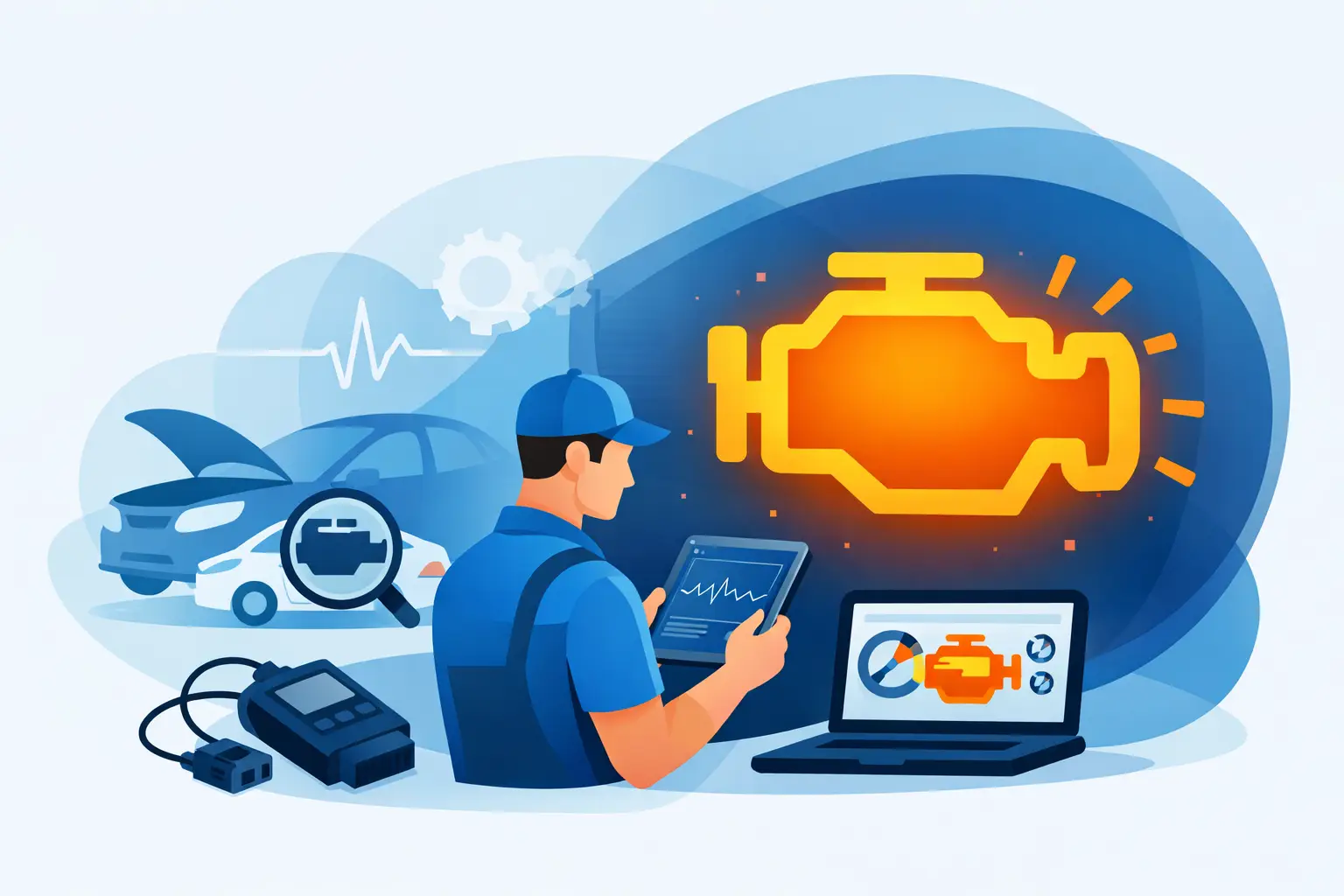
Engine Diagnostic Warning Light Explained
You are driving to work, school pickup, or your next delivery job, and suddenly the engine diagnostic warning light comes on. That small symbol can mean anything from a loose gas cap to a problem that could damage the engine if you keep driving. The key is not to guess and not to leave it for weeks hoping it goes away.
For most drivers, the real issue is not just the light itself. It is the uncertainty. Is the car safe to drive? Will it pass inspection? Is this going to be a quick fix or a major repair bill? A proper diagnostic check gives you a straight answer fast, which is exactly what you need when your car is part of your daily routine.
What the engine diagnostic warning light actually means
The engine diagnostic warning light, often called the check engine light, is your vehicle’s way of telling you the onboard system has detected a fault. Modern cars constantly monitor engine performance, emissions, fuel delivery, ignition timing, sensors, and other systems. When something falls outside the expected range, the car stores a fault code and turns the light on.
That does not always mean the engine is about to fail. In many cases, the problem starts small. A faulty sensor, an ignition misfire, an emissions issue, or an air intake leak can all trigger the light. But small faults have a habit of becoming expensive when they are ignored.
This is why reading the fault code matters. The warning light tells you there is a problem. The diagnostic process tells you what the problem is and whether it is urgent.
Solid light vs flashing light
Not all warning lights carry the same level of urgency. If the light is solid, the vehicle may still drive normally, but you should get it checked soon. The car has detected a fault, and even if you do not feel a change in performance yet, that can change quickly.
If the light is flashing, take it seriously. A flashing engine diagnostic warning light often points to an active misfire or another fault severe enough to risk damage to the catalytic converter or engine. In that situation, continued driving can turn a manageable repair into a far larger bill.
A simple rule helps here. Solid light means book diagnostics as soon as possible. Flashing light means stop using guesswork and get the vehicle inspected right away.
Common reasons the light comes on
The most common causes are not always dramatic, but they do need proper testing. Faulty oxygen sensors are a regular issue, especially on older vehicles. Ignition coil or spark plug faults can cause rough running, misfires, and poor fuel economy. Mass airflow sensor problems can upset the air-fuel mixture and affect performance.
You may also see the light because of a loose or damaged gas cap, vacuum leak, EGR valve issue, catalytic converter fault, fuel injector problem, or thermostat-related issue. On some vehicles, transmission faults and electronic throttle problems can trigger the same warning as well.
That is why online advice only gets you so far. Two cars can show the same dashboard light and need completely different repairs. The only sensible move is testing the vehicle rather than replacing parts at random.
What your car may do when the light is on
Some vehicles show no obvious symptoms at all. Others become harder to ignore. You may notice rough idling, hesitation when accelerating, poor gas mileage, reduced power, stalling, or a strong fuel smell. In some cases, the car may go into limp mode, where performance is limited to protect key components.
If you feel shaking, hear knocking, or notice smoke, that moves the problem into a more urgent category. The warning light is one thing. A warning light plus clear drivability issues means the vehicle needs attention before it strands you or causes further damage.
Can you keep driving?
It depends on how the car is behaving. If the engine diagnostic warning light is solid and the car feels normal, you may be able to drive a short distance, but you should still arrange a diagnostic check as soon as possible. Leaving it too long can affect fuel economy, emissions, reliability, and repair cost.
If the light is flashing, the engine is misfiring, the car is losing power, or the temperature is rising, driving it further is a risk. At that point, protecting the engine matters more than finishing the trip.
This is where practical advice beats guesswork. If you are unsure, have the car assessed before the problem grows. It is usually cheaper to diagnose early than to repair the damage caused by delay.
Why a code scan is only the first step
A lot of drivers assume plugging in a scanner gives a final answer. It does not. Fault codes point technicians in the right direction, but they do not always tell the full story. For example, a code for a lean fuel condition might be caused by an intake leak, a weak fuel pump, a bad sensor reading, or injector trouble. Replacing the first part mentioned by the scanner is how money gets wasted.
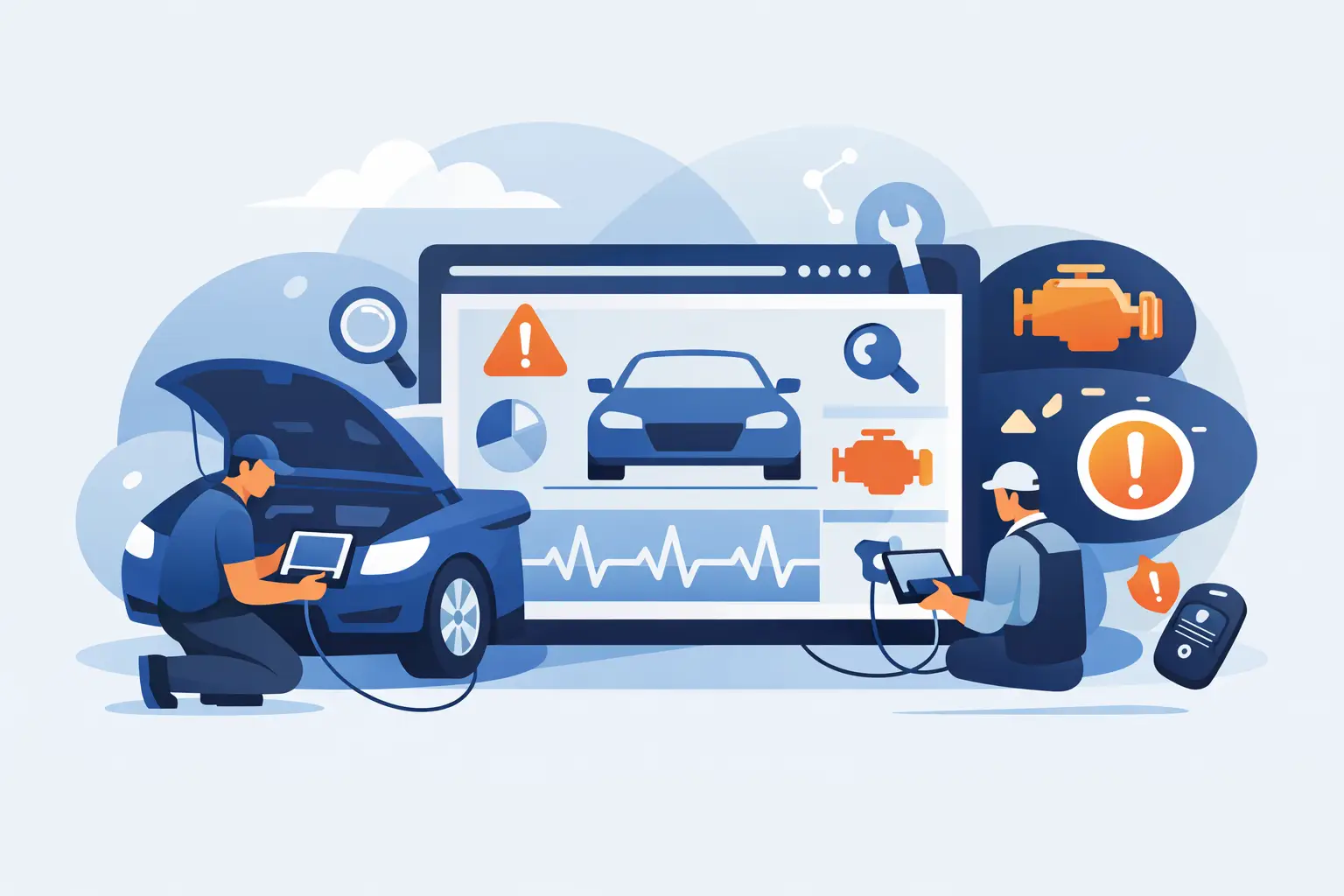
A proper diagnostic process includes reading stored codes, checking live data, testing related components, and confirming the root cause before repair work starts. That matters because modern vehicles are more complex than they used to be, and many faults overlap.
At Euro Auto Tech, this kind of practical, fault-first approach is what helps drivers avoid unnecessary repairs and get the car sorted faster.
How diagnostics can save you money
Most people think diagnostics add cost. In reality, good diagnostics cut cost by stopping trial-and-error repairs. Replacing coils, sensors, filters, or valves without confirming the fault often leads to repeat visits and extra labor. One accurate diagnosis is usually cheaper than two or three wrong repairs.
There is also the issue of hidden damage. An unresolved misfire can damage the catalytic converter. A fueling fault can affect engine performance over time. An emissions problem can become a failed inspection. The sooner the car is checked, the more options you usually have.
That is especially important if you rely on your vehicle every day. Commuters, family drivers, and small business owners do not need technical jargon. They need quick answers, fair pricing, and repairs that fix the issue the first time.
What to expect from a proper warning light inspection
A solid diagnostic visit should be straightforward. First, the technician will ask about the symptoms, when the light came on, and whether the car has been losing power, running rough, or using more fuel. Then the vehicle is scanned for fault codes and supporting system data.
From there, the testing gets more specific. Depending on the results, that may include checking ignition components, air intake leaks, sensor readings, emissions parts, fuel pressure, battery voltage, or wiring faults. The goal is not just to clear the light. The goal is to identify why it came on and what repair is actually needed.
That distinction matters. Clearing a light without fixing the fault only delays the problem. Sometimes the light stays off for a while, but the issue is still there, and it usually comes back at the worst time.
When not to wait
There are a few situations where delaying is a bad idea. If the light is flashing, if the engine is shaking, if the car stalls, if you smell fuel, or if the vehicle suddenly loses power, get it checked immediately. The same applies if the warning appears just before an inspection or after other symptoms such as overheating or gearbox hesitation.
Even when the fault seems minor, waiting can complicate diagnosis. Intermittent problems often get worse over time, but they can also become harder to trace if other parts start reacting to the original fault.
The better approach is simple. Treat the engine diagnostic warning light as an early warning, not background noise. Cars rarely fix themselves, and dashboard lights do not come on for no reason.
If that light has just appeared, the smart move is to get a proper diagnostic check, understand the fault, and deal with it before it costs more than it should. A quick answer now is usually what keeps your car reliable next week.
Share This Story, Choose Your Platform!
About the author :

Related Posts