Car Spray Paint Repair That Actually Lasts
A scratch on one door can make the whole car look tired. That is usually when drivers start searching for car spray paint repair and asking the same question – is this a quick fix, or is it going to turn into a bigger bodywork job?
The honest answer is that it depends on the damage, the paint type, and how well the repair is done. A decent paint repair should not just cover the mark for a few weeks. It should blend properly, hold up in daily use, and not leave you with a panel that looks obviously different in sunlight.
What car spray paint repair is actually fixing
Most paint damage is not just a surface mark. Modern paintwork is built in layers, usually primer, base coat, and clear coat. If only the top clear coat is marked, the repair may be relatively simple. If the scratch or chip has gone through the color and down to the primer or bare metal, the process is more involved.
This matters because the wrong approach creates more problems than it solves. A quick cover-up may hide the damage for a short time, but it can still leave the panel vulnerable to rust, peeling, or visible edges around the repaired area. On bumpers, poor preparation often leads to flaking. On metal panels, exposed areas can start corroding surprisingly fast if left untreated.
That is why proper spray paint repair is not just about making the car look better. It is also about protecting the panel and preserving value. If you plan to keep the vehicle, trade it in, or return it after finance, the finish matters.
When car spray paint repair works well
Spot repairs work best when the damage is localized. A stone chip on a hood, a scrape on a bumper corner, or a small scratch on a door can often be repaired without repainting half the car. The key is whether the damage can be feathered, primed, painted, and blended into the surrounding finish without creating a visible patch.
This is where experience counts. Matching paint is not just about finding the right code. Age, sun exposure, previous repairs, and the angle of the panel all affect how the final color looks. Silver, white pearl, black, and metallic finishes can be especially unforgiving. Two paints can match on paper and still look off once the car is outside.
A good shop looks at more than the damaged mark. It checks the panel shape, nearby panels, the condition of the existing paint, and whether blending is needed. Sometimes a repair that looks bigger on the estimate is actually the better value because it avoids a poor color match.
When a small repair is not enough
There are times when a local paint repair is the wrong call. If the panel is dented, creased, rusted, or already carrying failed paint from an older repair, spraying over the top will not give a durable result. The finish may sink back, react, or peel.
Large flat areas can also be tricky. A small repair in the middle of a hood or roof is harder to hide than damage near an edge or body line. The location changes what is realistic. On some cars, bumper scuffs are straightforward. On others, a quarter panel repair needs more blending for the color to look right.
This is also why the cheapest quote is not always the cheapest repair. If poor prep means the paint fails six months later, you end up paying twice. A practical body shop will tell you when a touch-up is enough and when the panel needs proper refinishing.
The process behind a proper paint repair
Drivers often see the final shine and assume the paint itself is the hard part. In reality, prep does most of the heavy lifting. The damaged area needs to be cleaned, sanded, and stabilized before any primer goes on. If there is dent damage, that has to be corrected first. If there is rust, it needs to be fully removed or treated, not hidden.
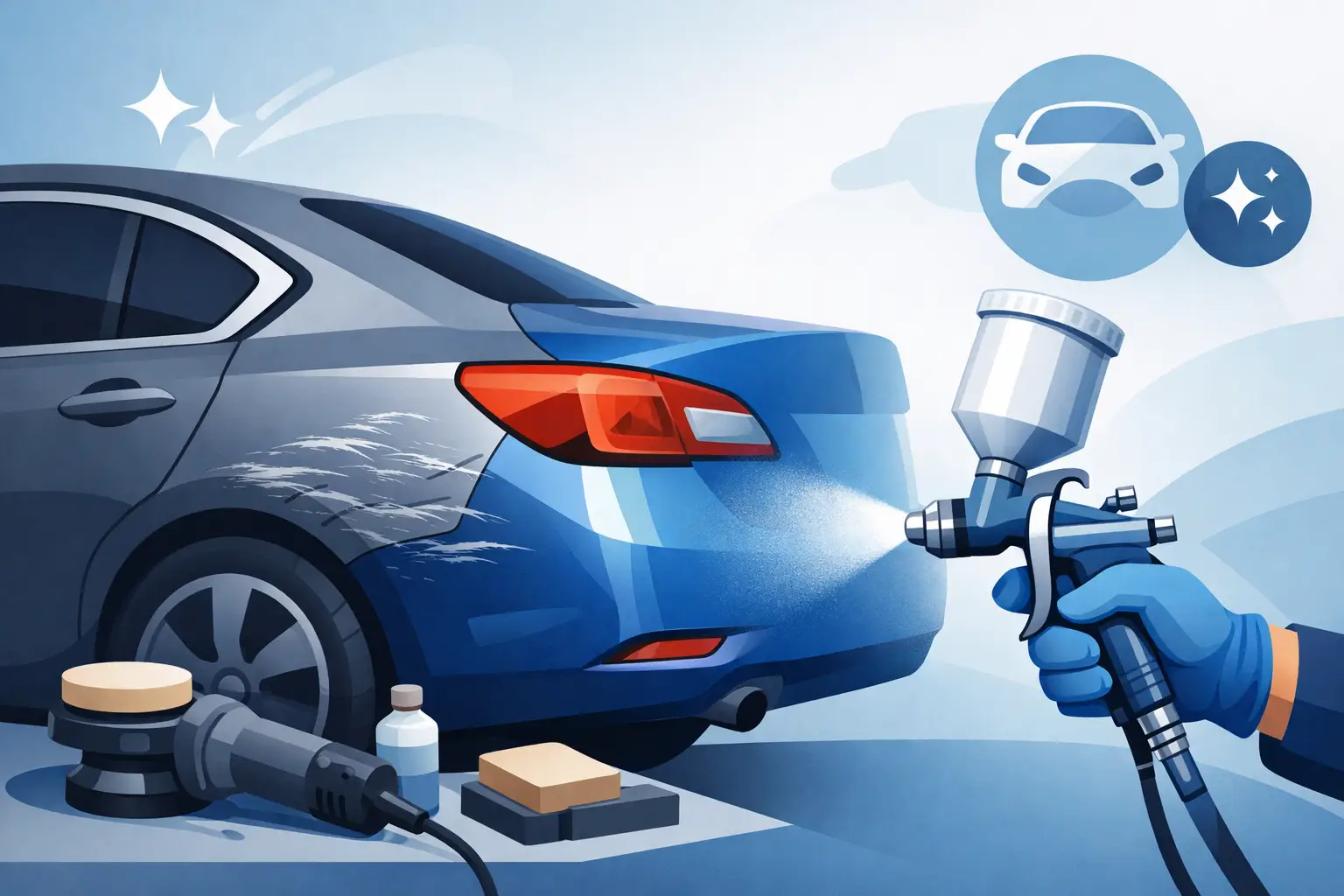
Once the surface is ready, the panel is primed and smoothed so the topcoat sits correctly. Then comes color application and, in most cases, clear coat. The last stage is curing and finishing, which may include polishing to help the repair blend into the surrounding paint.
Every step affects the result. Skip the prep, and the paint can fail. Rush the drying time, and the finish can mark easily. Get the blend wrong, and the repair will stand out every time the light hits it. A proper job is about control, not speed for the sake of it.
Why DIY spray paint repairs often disappoint
A lot of drivers try aerosol fixes first, especially for bumper scuffs or parking scratches. That can be tempting when the damage looks minor. Sometimes it is acceptable on an older work vehicle where appearance is not a priority. But on most daily drivers, DIY paint repair tends to be obvious.
The common issues are overspray, poor color match, rough texture, and hard edges around the repaired section. Without the right prep and equipment, the finish rarely matches the rest of the panel. Metallic paint is especially difficult because the flake orientation changes the appearance of the color.
There is also the problem of making a future professional repair harder. Thick touch-up paint, bad filler work, or multiple aerosol layers can increase labor because all of that has to be removed before the panel can be refinished properly.
If the car is relatively new, on lease, or something you take pride in, DIY usually makes sense only for the smallest chips. For anything larger, proper spray work saves hassle.
What affects the cost of car spray paint repair
Price depends on size, location, paint type, and condition of the panel before work starts. A small bumper corner scuff is usually more affordable than damage across a door and fender. Pearlescent and tri-coat finishes can cost more because they take extra time and material to match correctly.
Labor is a big factor too. Straightforward paint repair is one thing. Paint repair with dent removal, rust treatment, or plastic bumper reshaping is another. If trim, lights, handles, or moldings need removing for a clean job, that also changes the estimate.
The practical way to look at it is value, not just headline price. A fair quote should reflect prep, material quality, and the chance of a repair that still looks right months later. If a shop gives you a very low number without seeing the vehicle properly, be cautious.
How to know if the finish will match
This is one of the biggest concerns for any customer, and rightly so. A repair can be technically complete and still disappointing if the color match is off. Good paint matching uses the manufacturer code as a starting point, not the whole answer.
Panels fade at different rates. Plastic bumpers can reflect color differently from metal fenders even when painted at the same time. Weathering changes tone. Previous repairs can shift the shade again. That is why blending into adjacent areas is sometimes necessary, even if the original damage is small.
A professional approach is to assess the actual vehicle in front of you, not assume the code tells the full story. That is the difference between paint that looks acceptable in the workshop and paint that still looks right outside.
Choosing the right shop for spray paint repair
If you need fast bodywork, it is worth asking a few direct questions. Will the shop inspect the panel properly before quoting? Are they looking at underlying dent or rust damage, not just the top layer? Do they explain whether the repair is a spot job or a blend across the panel? A straight answer is usually a good sign.
You also want a garage that understands the repair in the context of the whole vehicle. If the bumper scuff happened during a parking knock, there may be clips, brackets, or alignment issues to check. If the damage is near a wheel arch, there may be early rust starting. Body and paint work should not be treated in isolation.
For drivers who want speed, affordability, and a repair that holds up, a practical local shop is often the best fit. Euro Auto Tech handles body and paint work with the same no-nonsense approach as mechanical repairs – assess it properly, quote it fairly, and get the car looking right without wasting your time.
A good paint repair should do more than hide damage for now. It should leave you confident every time you walk up to the car, whether you are keeping it for years or just want it back to a clean, presentable standard.
Share This Story, Choose Your Platform!
About the author :

Related Posts