Exhaust Repair Near Me: What to Check First
That sudden growl from under the car usually starts at the worst time – on the school run, heading to work, or right before an MOT. If you’re searching for exhaust repair near me, you probably do not need a long lesson on car parts. You need to know what the noise means, whether the car is still safe to drive, and how fast the problem can be fixed without paying over the odds.
A damaged exhaust is not just annoying. It can affect performance, fuel economy, emissions, and cabin comfort. In some cases, it can also turn into a safety issue, especially if fumes are entering the vehicle or a loose section is hanging underneath. The right repair depends on where the fault is, how bad the damage is, and whether a simple fix will last or just delay a bigger bill.
When to search for exhaust repair near me
Most drivers wait until the car gets noticeably louder, but exhaust problems often show up earlier. A blowing sound when you accelerate, a metallic rattle under the floor, a vibration through the pedals, or a smell of exhaust inside the cabin can all point to trouble. If the check engine light comes on with poor fuel economy or the car feels sluggish, the issue may be affecting sensors or back pressure too.
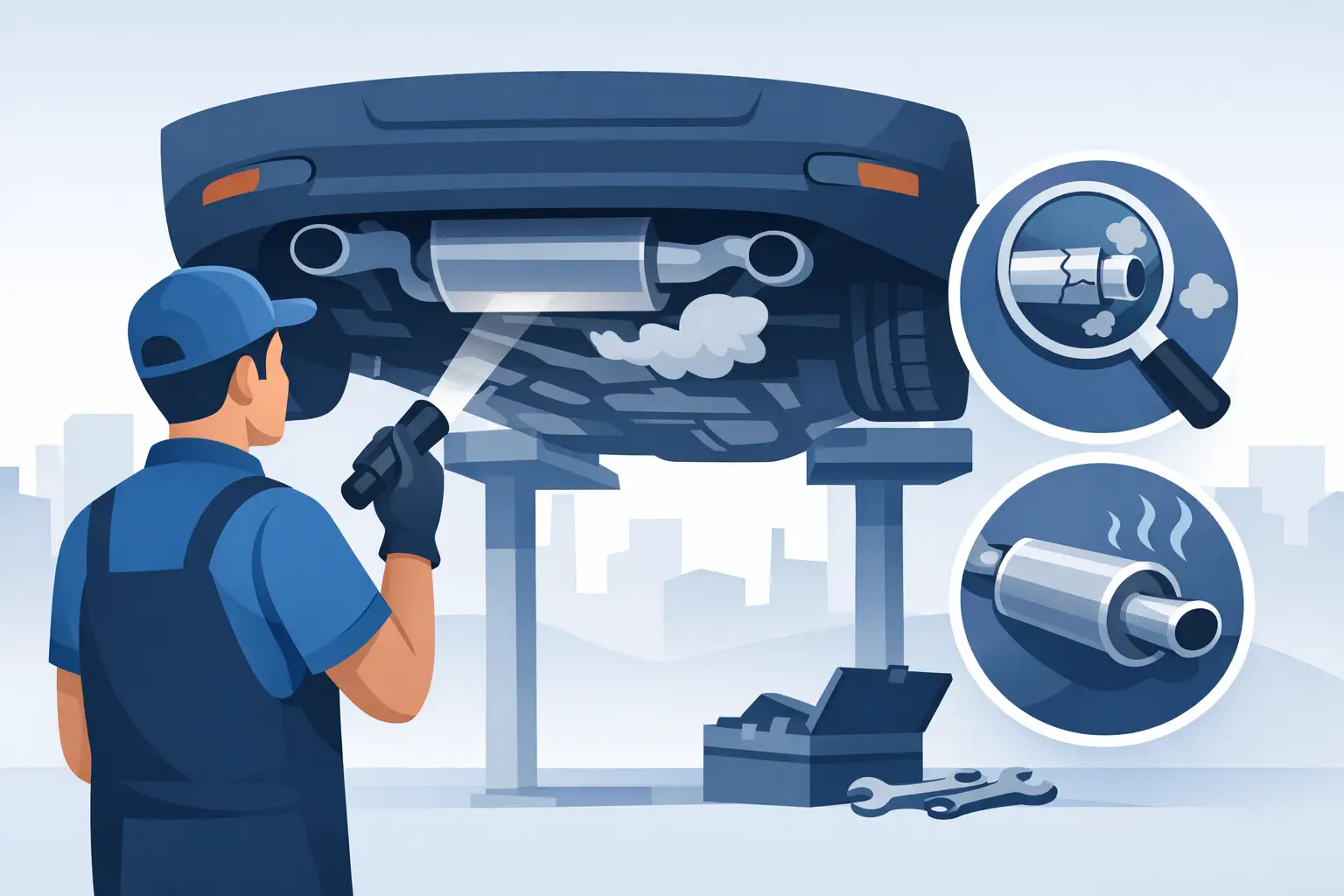
Sometimes the problem is obvious. A rusty rear silencer, a broken clamp, or a pipe sitting too low can be spotted quickly on inspection. Other times, the leak is small and hidden around a joint, flexi pipe, or mounting point. That is why proper diagnosis matters. Guesswork can lead to replacing the wrong section and spending more than necessary.
If your car is due for inspection soon, do not ignore it. Exhaust faults are a common reason vehicles fail emissions and safety checks. What starts as a small leak can become a failed test, extra downtime, and a more expensive repair if corrosion spreads.
What usually goes wrong with an exhaust system
Exhaust systems live a hard life. They deal with heat, road salt, moisture, speed bumps, potholes, and constant vibration. Over time, even well-made systems wear out.
One of the most common issues is corrosion. Water collects inside the system, especially on short trips where the exhaust does not get hot enough for long enough to dry out fully. That rust can eat through silencers, center sections, and pipe joints. On older vehicles, the metal can become so weak that one section gives way and puts extra strain on the rest.
Mountings and rubber hangers also fail. When they do, the exhaust can sag, knock against the underside of the car, or shift out of place. That knocking sound over bumps is often a clue. Clamps, brackets, and flexi pipes are other regular weak points. On newer cars, faults with oxygen sensors or catalytic converters can add another layer to the diagnosis.
Then there is impact damage. A low car catching a curb or speed bump can crack a joint or bend a pipe. It does not always look dramatic, but it can be enough to cause a leak, vibration, or restricted flow.
Repair or replace? It depends on the damage
This is where a lot of drivers want a quick yes or no answer, but the honest answer is that it depends. A small issue in one section can often be repaired without changing the full system. A loose clamp, worn hanger, or minor joint leak may be a straightforward job. If the damage is limited and the surrounding metal is still solid, a targeted repair makes sense.
If the exhaust is heavily rusted across multiple sections, replacement is usually the better value option. Patching one hole on a system that is already weak elsewhere often means another failure is around the corner. You might save a little today and end up back in the shop next week.
Catalytic converter problems need especially careful assessment. Sometimes the issue is not the converter itself but a sensor fault or engine running issue that has triggered a warning light. Replacing expensive parts without confirming the root cause is how repair costs spiral.
A good garage will tell you what can be repaired, what should be replaced, and what can reasonably wait if your budget is tight. That kind of straight answer matters when you rely on the car every day.
How much exhaust repair near me should cost
Prices vary because exhaust systems vary. A simple bracket or clamp repair is very different from replacing a catalytic converter or multiple corroded sections. Vehicle make, model, engine size, and parts availability all affect the final bill.
Labor time matters too. Some exhaust components are easy to access. Others are seized, heavily rusted, or fitted in awkward positions that turn a simple-looking job into more workshop time. That is why phone estimates can only go so far until the car is properly inspected.
What matters most is transparency. You should know whether you are paying for a small repair, a section replacement, or a larger system job. You should also know if aftermarket parts are being used and whether they are a sensible match for your vehicle. Cheaper is not always better, but neither is paying dealer-level prices for a standard repair that an experienced independent garage can handle for less.
Can you keep driving with a bad exhaust?
Sometimes yes, but that does not mean you should leave it. A minor leak at the rear of the car is different from a serious leak near the front, where fumes have more chance of reaching the cabin. If the exhaust is hanging low, making the car much louder than normal, or causing fumes inside, get it checked as soon as possible.
There is also the risk of extra damage. A loose exhaust can stress mounts, crack other sections, or damage surrounding components. If the issue affects emissions control, your engine may not run as efficiently. Leave it long enough and a repair that could have been quick and affordable may turn into a larger replacement job.
For commuters, families, and business owners, downtime is often the bigger problem than the repair itself. Fast diagnosis and same-day availability make a real difference when the car cannot be off the road for long.
What a good local garage should offer
When people type exhaust repair near me, they are not only looking for distance. They are looking for convenience, fair pricing, and confidence that the job will be done properly. A good local garage should be able to inspect the system quickly, explain the fault in plain English, and give you clear options.
Speed matters, but so does accuracy. Exhaust noise can sometimes be mistaken for suspension knocks, heat shield rattles, or engine issues. You want mechanics who can pinpoint the cause instead of replacing parts until the sound goes away.
It also helps if the garage works on all makes and models. Exhaust systems differ a lot between vehicles, and experience counts. At Euro Auto Tech, the focus is on practical repairs, quick turnaround, and fair prices for drivers who need the car sorted without unnecessary delays.
A few signs you should book now, not later
If the car sounds dramatically louder overnight, book it. If you can smell fumes in the cabin, book it. If a warning light has appeared alongside poor performance, book it. And if your exhaust is visibly loose, scraping, or rattling hard underneath, do not wait for it to detach on the road.
The same applies before a test or long trip. Many drivers put off small exhaust issues because the car still moves. That is understandable. But once the problem starts affecting emissions, comfort, or safety, delay usually costs more than action.
The good news is that many exhaust faults are repairable without a major bill when caught early. The key is getting the car inspected before the damage spreads or the symptoms become impossible to ignore.
If your car is louder than it should be, smells of exhaust, or just does not feel right, trust that instinct and get it checked. A quick repair today is usually far better than a bigger problem under the car tomorrow.
Share This Story, Choose Your Platform!
About the author :

Related Posts